

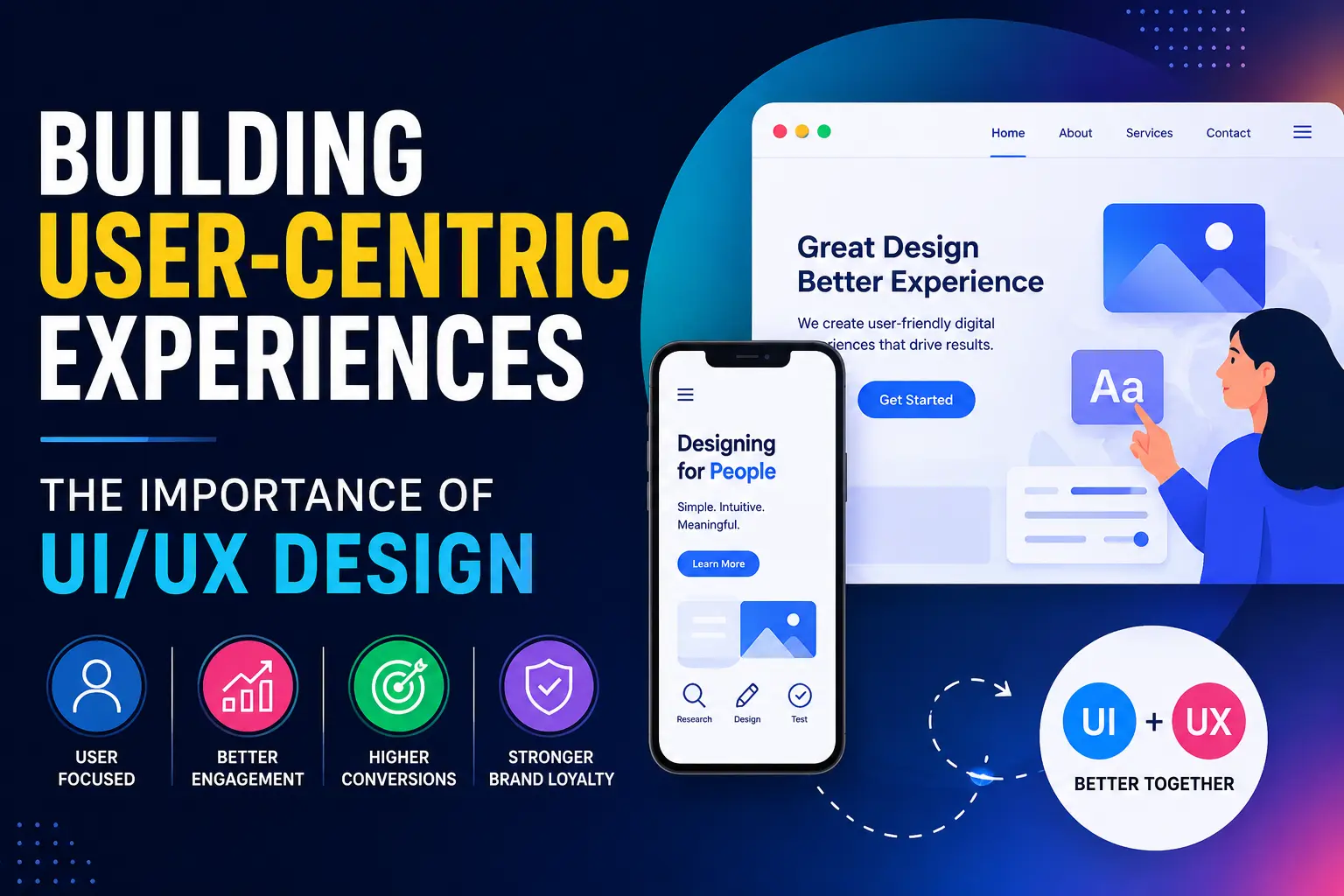
Building User-Centric Experiences: The Importance of UI/UX Design
In today’s fast-paced digital world, users expect websites, mobile apps, and software platforms to be fast, visually appealing, and easy to use. Businesses no longer compete only through products or services—they compete through experiences. This is where UI/UX design plays a critical role. A well-designed user interface (UI) and user experience (UX) can determine whether users stay on a platform or leave within seconds.
From startups to multinational companies, organizations are investing heavily in UI/UX design because it directly impacts customer satisfaction, engagement, conversions, and brand loyalty. A beautiful design alone is not enough; the experience must also be smooth, intuitive, and user-friendly. Companies that prioritize user-centric experiences gain a competitive advantage in the digital marketplace.
This article explores the importance of UI/UX design, the difference between UI and UX, key principles of effective design, and how businesses can create meaningful digital experiences for users.
Also Read: The Future of Web Development: Emerging Trends and Technologies
Although UI and UX are often used together, they are two different concepts that work hand in hand.
User Interface (UI) design focuses on the visual appearance and interactive elements of a digital product. It includes:
UI design is about creating visually attractive and interactive interfaces that improve usability and user engagement.
For example, the clean interfaces of apps like Instagram and Spotify are the result of strong UI design principles.
User Experience (UX) design focuses on the overall experience users have while interacting with a product or service. UX designers aim to make products:
UX design involves user research, wireframing, testing, and analyzing user behavior to improve satisfaction.
In simple terms:
Both are essential for creating successful digital experiences.
Users form opinions about a website or app within seconds. If the interface looks outdated or confusing, users may leave immediately.
Businesses only get one chance to make a first impression, and UI design strongly influences that moment.
For example, an eCommerce website with clean navigation, attractive product displays, and a simple checkout process is more likely to convert visitors into customers.
A positive user experience keeps customers happy. When users can easily find information, complete tasks, and navigate smoothly, they feel satisfied.
Good UX design eliminates frustration and creates seamless interactions. This leads to:
User satisfaction is one of the main reasons why companies invest in UX research and usability testing.
UI/UX design directly impacts conversions. Whether the goal is purchasing a product, signing up for a newsletter, or downloading an app, a user-friendly design encourages action.
Effective UX design helps users move smoothly through the customer journey without confusion or unnecessary steps.
Examples of conversion-focused design include:
Even small design improvements can significantly boost conversion rates and sales.
Professional UI/UX design helps establish trust and credibility. Users are more likely to trust businesses with polished and functional digital platforms.
Poor design can make a company appear unprofessional or unreliable. In contrast, a seamless and visually appealing experience strengthens brand identity and customer confidence.
Consistent design elements such as colors, fonts, and layouts also improve brand recognition.
Accessibility is a major part of modern UX design. Digital products should be usable by everyone, including people with disabilities.
Accessible design includes:
Inclusive design ensures that businesses reach wider audiences while complying with accessibility standards and regulations.
The foundation of great UX design is understanding users’ needs, goals, and behaviors.
Designers conduct user research through:
This data helps create experiences tailored to real users rather than assumptions.
Simple designs are easier to use. Cluttered layouts overwhelm users and create confusion.
Minimalist design helps users focus on important actions and information.
Best practices for simplicity include:
The goal is to reduce friction and improve usability.
Consistency creates familiarity and improves usability. Users should not have to relearn interface elements on every page.
Consistent UI elements include:
Consistency helps users feel comfortable and confident while using a product.
Mobile users now make up a significant portion of internet traffic. Websites and apps must work smoothly across all screen sizes.
Responsive design ensures:
A mobile-friendly experience is essential for SEO, engagement, and customer satisfaction.
Users expect fast-loading websites and applications. Slow performance can lead to high bounce rates and lost revenue.
UI/UX designers collaborate with developers to optimize:
Fast performance creates smoother interactions and improves the overall experience.
UX research helps designers understand user behavior and make data-driven decisions.
Common UX research methods include:
Direct conversations with users provide valuable insights into pain points and expectations.
Surveys help collect feedback from large groups of users quickly.
Usability testing observes how users interact with a product to identify issues and areas for improvement.
Analytics tools reveal user behavior patterns, such as where users click, scroll, or abandon pages.
Research-driven design leads to more effective and user-friendly experiences.
UI/UX design also impacts search engine optimization (SEO). Search engines prioritize websites that provide positive user experiences.
Key UI/UX factors affecting SEO include:
A website with strong UX keeps users engaged longer, which can improve search rankings.
Google’s Core Web Vitals also emphasize the importance of user experience metrics like loading speed and visual stability.
Complex menus confuse users and make information difficult to find.
Excessive pop-ups disrupt the user experience and increase frustration.
Non-responsive designs create usability issues for mobile users.
Changing styles and layouts across pages creates confusion.
User feedback provides valuable insights. Ignoring it can lead to poor experiences and lost customers.
Avoiding these mistakes helps businesses create more effective digital products.
Dark mode has become increasingly popular because it reduces eye strain and improves aesthetics.
Voice interactions through smart assistants are shaping the future of UX design.
Artificial intelligence helps create personalized user experiences based on behavior and preferences.
Small animations and interactive feedback enhance engagement and usability.
Clean and distraction-free interfaces continue to dominate modern UI trends.
Staying updated with design trends helps businesses remain competitive.
Investing in UI/UX design provides long-term business benefits, including:
Companies that prioritize user experience often outperform competitors because customers value convenience and usability.
Research consistently shows that good UX design delivers a strong return on investment (ROI).
Understanding users is the first step toward creating better experiences.
Inclusive design ensures products are usable by diverse audiences.
Continuous usability testing helps identify problems early.
Mobile optimization is essential in today’s digital landscape.
Designers, developers, marketers, and stakeholders should work together to create cohesive experiences.
The future of UI/UX design will be shaped by emerging technologies such as:
As technology evolves, user expectations will continue to grow. Businesses must adapt by creating intuitive, accessible, and personalized experiences.
Design will become even more human-centered, focusing on emotional connections and seamless interactions across digital platforms.
UI/UX design is no longer optional—it is a critical component of digital success. Businesses that prioritize user-centric experiences can improve customer satisfaction, strengthen brand credibility, increase conversions, and stay ahead of competitors.
While UI focuses on visual appeal, UX ensures smooth functionality and usability. Together, they create meaningful digital experiences that users value and remember.
In an increasingly competitive digital environment, companies that invest in high-quality UI/UX design are better positioned for long-term growth and success. By understanding user needs, simplifying interactions, and embracing innovation, businesses can build experiences that truly connect with their audiences.
As technology continues to evolve, the importance of UI/UX design will only grow, making it one of the most valuable investments for modern businesses and digital products.