
In today’s competitive business world, having a strong online presence is no longer optional. Businesses of all sizes are using digital marketing to attract customers, increase sales, and build long-term brand awareness. Whether you own a startup, a local company, or an established enterprise, using the right digital marketing strategies can significantly improve your business growth.
Digital marketing is not just about running ads or posting on social media. It included a combination of smart techniques that help businesses reach the right audience at the right time. Companies that use effective marketing strategies often experience better customer engagement, higher conversions, and increased revenue.
In this guide, we will explore the most effective digital marketing strategies for business growth and how they can help your brand succeed in a competitive market.
Traditional marketing methods like newspaper ads and billboards still exist, but digital marketing offers something much more powerful: measurable results and targeted audiences.
With digital marketing, businesses can:
Businesses that ignore digital marketing often struggle to compete with brands actively investing in online marketing efforts.
Your website is the online face of your business. Before implementing any digital marketing strategy, ensure your website is optimized.
A business website should include:
Users leave websites that take too long to load. A fast website improves both user experience and search engine rankings.
Most users browse websites on smartphones. Your website must work perfectly on mobile devices.
Guide visitors toward actions such as:
A properly optimized website helps search engines understand your content and improve visibility.
Without a solid website foundation, even the best marketing campaigns may fail.
Search Engine Optimization (SEO) is one of the most important digital marketing strategies for long-term business growth.
SEO helps businesses rank higher in search engine results like Google Search Engine. Higher rankings mean more website visitors and more opportunities to generate sales.
Businesses should identify keywords that customers search for online.
For example:
Targeting relevant keywords improves website traffic qualitatively.
On-page SEO includes:
Technical SEO focuses on:
Local businesses should optimize for local searches by creating and improving their Google Business Profile and collecting customer reviews.
SEO takes time, but it provides long-lasting business growth benefits.
Content marketing is one of the most effective ways to build trust and authority.
People rarely buy immediately. They first research products and services. High-quality content educates potential customers and builds confidence.
Types of content marketing include:
Educational blog posts improve SEO and attract organic traffic.
Video marketing increases engagement and helps explain products clearly.
Show how your product or service solved customer problems.
Visual content makes information easier to understand.
Detailed resources help businesses generate leads.
Useful content positions your brand as an expert in your industry.
Social media platforms allow businesses to connect directly with their audience.
Popular platforms include:
Each platform serves different purposes.
Great for paid advertising, local business promotion, and community building.
Ideal for visual branding and product showcasing.
Best for B2B businesses and professional networking.
Perfect for viral short-form content.
Consistency matters. Businesses should post valuable content regularly instead of only promoting products.
A balanced content strategy includes:
Social media helps increase visibility and customer trust.
PPC advertising delivers faster results than SEO.
Platforms include:
Businesses pay only when someone clicks their ad.
For example, a digital marketing agency can target keywords like:
“best SEO agency near me”
This allows businesses to attract high-intent customers.
However, PPC campaigns require proper budget management and optimization.
Email marketing remains one of the highest ROI digital marketing strategies.
Instead of depending only on social media algorithms, businesses can directly communicate with customers.
Email campaigns can include:
Introduce your business to new subscribers.
Share discounts and special offers.
Provide useful information to customers.
Reconnect with interested buyers.
Personalized emails often generate better engagement than generic campaigns.
Building an email list gives businesses long-term marketing control.
Video content continues to dominate online marketing.
Consumers prefer watching videos over reading long product descriptions.
Businesses can create:
Platforms like YouTube, Instagram Reels, and TikTok make video marketing highly effective.
Short-form videos especially attract younger audiences.
Businesses using video marketing often see better engagement and conversion rates.
Influencer marketing helps brands build trust quickly.
Instead of promoting products directly, businesses collaborate with trusted creators.
Influencers can:
Micro-influencers often generate better engagement because their audience trusts them more.
This strategy works particularly well for:
Choosing influencers with relevant audiences is essential.
Getting website visitors is not enough. Businesses must convert visitors into customers.
Conversion Rate Optimization improves website performance.
Strategies include:
Clear messaging improves conversions.
Buttons like:
encourage action.
Businesses can test different headlines, images, and layouts to improve performance.
Even small website changes can increase sales significantly.
Marketing automation saves time and improves efficiency.
Businesses can automate:
Automation tools help businesses stay consistent while reducing manual work.
Popular marketing tools include CRM software and automation platforms.
This strategy is especially useful for growing businesses.
Successful marketing depends on data.
Businesses should track:
Using analytics helps identify what works and what does not.
Without data tracking, businesses may waste money on ineffective strategies.
Smart decisions based on analytics lead to sustainable growth.
Online reputation matters more than ever.
Customers trust online reviews before buying products or services.
Businesses should:
A positive reputation increases trust and customer loyalty.
Negative reviews should be handled professionally instead of ignored.
Many businesses fail because they make avoidable mistakes.
Common mistakes include:
Avoiding these issues improves marketing success.
Digital marketing continues to evolve rapidly.
Emerging trends include:
Businesses that adapt quickly often stay ahead of competitors.
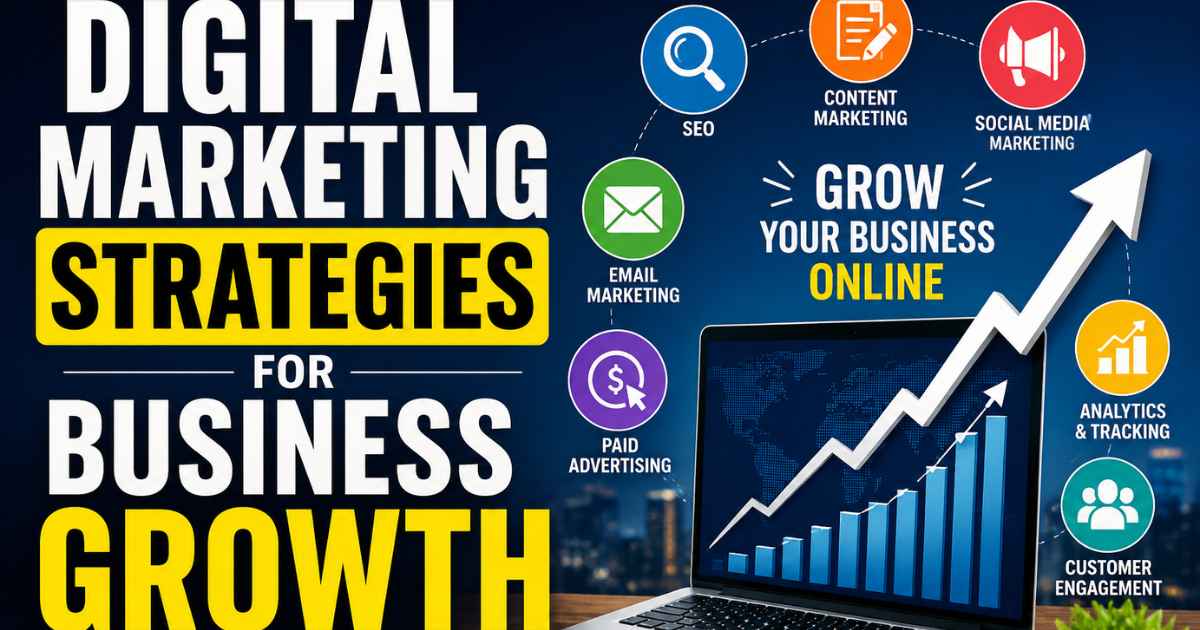
Digital marketing is one of the most powerful tools for business growth. A successful strategy combines SEO, content marketing, social media, paid advertising, email marketing, and analytics.
There is no single strategy that works for every business. The best approach is to test multiple methods, monitor performance, and improve continuously.
Companies investing in smart digital marketing strategies are more likely to attract customers, increase sales, and build long-term success.
Instead of relying on outdated marketing methods, businesses should embrace digital channels to stay competitive in the modern marketplace.
Digital marketing strategies are online methods businesses use to attract customers and increase sales.
It helps businesses reach larger audiences, generate leads, and increase brand visibility.
SEO, content marketing, and social media marketing are highly effective for long-term growth.
SEO usually takes 3–6 months to show noticeable results.
Yes, social media helps businesses connect with customers and build trust.
PPC is paid advertising where businesses pay only when users click ads.
Yes, email marketing remains one of the highest ROI marketing methods.
Small businesses can reach targeted customers with affordable marketing campaigns.
Content marketing involves creating helpful blogs, videos, and guides to attract audiences.
By tracking traffic, conversions, leads, and ROI.
It improves website performance to turn visitors into customers.
AI, automation, and personalized experiences are shaping the future of marketing.